

What the law requires
Under the German Road Traffic Regulations (StVO), a dog in a car counts as cargo. According to Section 22 StVO, cargo must be secured so that it does not slide or tip over, even during emergency braking or a sudden swerve.
Anyone who does not secure their dog pays a warning fine of 35 euros. If others are endangered, it is 60 euros and one penalty point in Flensburg, Germany's central driver register; with damage to property, 75 euros and one point.
What happens in an accident
The figures from the ADAC crash tests are sobering. Even at 50 km/h, thirty times a body's own weight can act on it inside a car. An unsecured Dalmatian weighing 22 kilograms then hits the driver's headrest with a force of around 500 kilograms. So it is not only about the dog, but about everyone in the car.
Why “crash-tested” often means little
The non-profit US organisation Center for Pet Safety (CPS) tests harnesses with specially built crash-test dogs, without real animals. In its 2013 study, only one of the harnesses tested kept the dog safely on the seat. With the others, the test dog was thrown from the seat or the harness was badly deformed.
Since then CPS has awarded its own certification of up to five stars. The current list of certified harnesses includes the Clickit range from Sleepypod in sizes S to XL. The Clickit Sport was the first harness in the new programme to receive the top rating of five stars.
Crate, guard or harness?
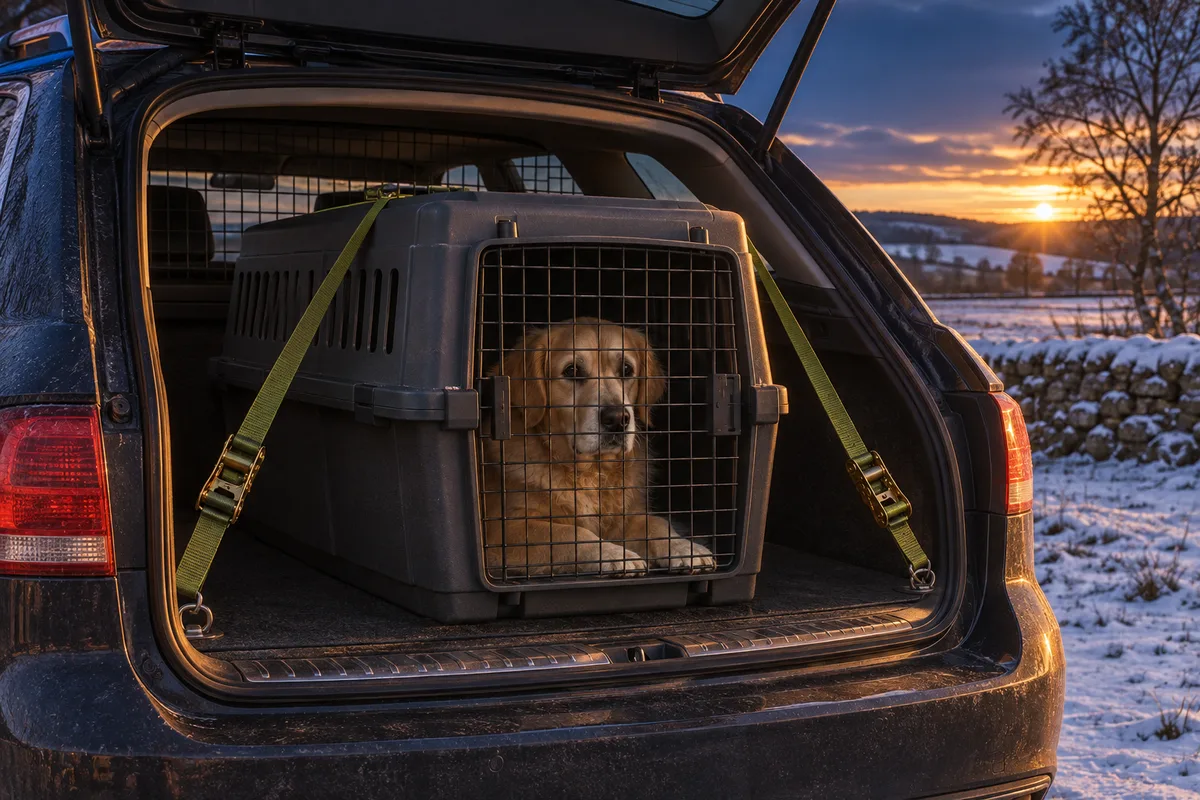
- Transport crate: In the ADAC test, sturdy crates in the footwell behind the front seat performed well. Larger crates belong in the boot and must be firmly lashed down.
- Dog guard or net: It protects the occupants, but does not prevent the dog from being thrown around in the boot.
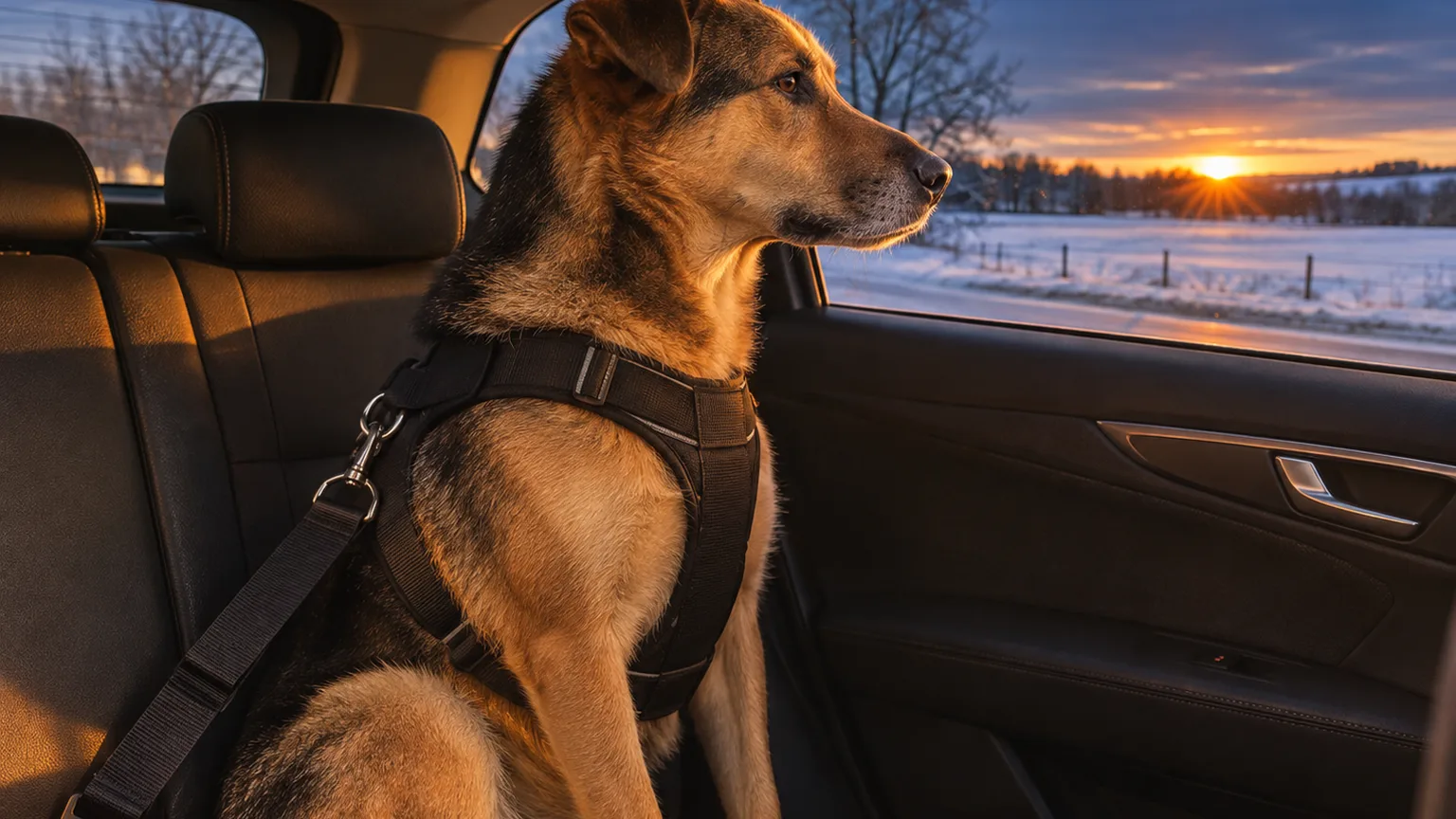
- Safety harness: It is suitable for the back seat if it has been verifiably tested and fits precisely. Never fasten the restraint to the collar, as this can seriously injure the neck.
Good to know: CPS certification applies to specific weight classes for each size. Weigh your dog before buying and choose the right size.
Our guides do not replace veterinary advice. The links lead to sources and manufacturers; they are not affiliate links.